
Wayne County Civil Docket Searches
Pick the tool that matches the court level. Circuit civil cases live in WVPASS, where registration and two-factor authentication come first. Smaller civil claims sit in the free Magistrate Case Record Search. It caps results at 30 matching records. It also shows no document images.
An exact case ID saves time. Searching by name alone? Confirm the party role, filing range, case type, and which Wayne court heard the matter. Deeds, liens, marriage records, and probate items are different. They live in the County Clerk's separate system, not the civil docket, unless a lawsuit pulled them in.
- Identify Circuit Court or Magistrate Court from the pleading, notice, or monetary and case-type context.
- Search the proper portal by exact case ID, or narrow a name search by role, date, type, and Wayne location.
- Compare the parties, filing date, court, and case number before selecting a match.
- Read filings, service, motions, settings, orders, and judgment entries in chronological order.
- Request the exact judgment or other document from the responsible clerk if a certified copy is required.
Choosing the Wayne Civil Court
West Virginia splits civil work between two courts. Magistrate Court handles general civil claims up to $20,000, plus unlawful entry, detainer, and wrongful-occupation cases where nobody disputes title. Circuit Court holds statutory civil jurisdiction over matters above $7,500, and it also takes equity cases, appeals, and other assigned categories. Notice the overlap between those grants. A claim's dollar amount alone will not reliably point you to the right Wayne County civil docket.
| Court | Typical Wayne civil work | Record route |
|---|---|---|
| Magistrate Court | Small claims and other civil matters within magistrate jurisdiction | Free magistrate search, then clerk for copies |
| Circuit Court | General civil, equity, appeals, and matters assigned by law | WVPASS or Circuit Clerk |
| County Clerk | Deeds, liens, probate, marriage, and recorded county documents | Document Inquiry or recording office |
Don't guess. Check the caption or case number instead, because it tells you which court actually holds the file. A magistrate appeal opens a fresh Wayne County Circuit Court docket, yet the original magistrate case still sits in the lower court.
Civil Dockets: What They Show
Civil Rule 79 governs what a civil docket contains. It calls for chronological entries. These briefly note the nature and date of filed papers, process, proof of service, appearances, orders, verdicts, judgments, and other proceedings. So the Wayne County civil docket is a log, not a full transcript. An entry confirms that an item exists, even when the docket never displays its contents.
| Case Number | The exact court ID, shown here only as case ID as filed; retain every character. |
|---|---|
| Parties | Plaintiff, defendant, petitioner, respondent, and other roles as the court records them. |
| Filings | Complaint or petition, answer, counterclaim, service returns, and later papers. |
| Motions | Requests placed before the court; filing a motion does not mean the court granted it. |
| Judgment | An entered result that may be default, consent, partial, amended, or final. |
Wayne Civil Entries in Plain Terms
Read the sequence, not just the labels. Service tells you whether process went out and came back. An appearance means a party or lawyer has joined the case. A scheduling order sets deadlines, while a continuance simply moves an event to a new date. One more distinction matters. A judgment is a final ruling. It is not the same as a motion, a proposed order, or a hearing notice.
- Service return
- A record of attempted or completed delivery of legal process.
- Appearance
- A party or lawyer formally takes part in the case.
- Motion
- A request for a ruling, not the ruling itself.
- Order
- A court direction that may be temporary, amended, or final.
- Judgment
- An adjudicative entry whose exact scope must be read in the document.
A WVPASS title tells you which paper was filed, and the free download it offers is not a certified copy. When you need a certified Wayne County civil record, the Circuit Clerk is the office that authenticates it.
What Cases Fill the Civil Docket
The Wayne County civil docket covers a wide mix. It spans general civil suits, equity matters, magistrate appeals, and claims that began in the lower courts. Detainer and wrongful-occupation cases qualify for Magistrate Court as well. One caution matters here. Adoption, guardianship, mental health, and other family-related filings sit under special access rules, so treat them as closed rather than ordinary open court records.
- General civil claims and suits seeking money or other relief
- Small claims and other matters within magistrate jurisdiction
- Unlawful-entry or detainer cases where title is not disputed
- Equity cases and appeals assigned to Circuit Court
- Protected categories whose public access may be limited
Wayne Civil Filings by Category
How busy is the civil docket? The 2024 Judiciary annual report counts 411 Wayne County circuit civil filings. That total breaks into 143 general civil matters, 76 adoptions, 85 mental-health filings, 26 guardianships, 11 magistrate appeals, and 70 other civil matters. Keep in mind these are filings, not outcomes. They do not equal the number of public files you can open.
Numbers on a dashboard do not unlock sealed files. Access to adoption, mental-health, guardianship, or family documents stays restricted no matter what the totals say. The Judiciary dashboard works well for early trends; the annual report is the final word for the report year.
Hearings on the Civil Docket
Civil settings come in several flavors. A status conference, a motion hearing, a pretrial event, or the trial itself might be listed. So always match the setting type to the notice or order you received. Confirm with the Wayne County civil docket before you appear. Ask too whether attendance is in person, remote, by phone, or waived. The court's holiday schedule alone never sets a courtroom date.
One more caution. A continuance only moves a setting forward; it does not end the case. A replacement date should show up in a new order or docket event. The Wayne County court schedule walks through how to verify date, time, room, judge, and setting type. Check those details with the filing clerk.
When Wayne Civil Records Are Missing
A Wayne County docket search that turns up empty has several common causes. You may be searching the wrong court or the wrong county, the file could be archived, or a spelling or party-role mismatch hides the case. Sealed and confidential records stay out of results too. Coverage matters as well: WVPASS generally holds circuit records from July 1, 1999 forward. Older civil cases may need a direct request to the Circuit Clerk or the archives.
Check the custodian first. Property recordings and probate material use the County Clerk, magistrate suits use the Magistrate Clerk, and Circuit Court litigation uses the Circuit Clerk.
Put the essentials in writing when you request civil court records. List the court level, the case number if you have it, party names, the date range, and the exact document or event you need. Say what format you want and whether the copies must be certified. Ask for a fee estimate first.
Who Can See Civil Dockets
Access to Wayne County civil records is presumed to be public. Still, seals, protective orders, family confidentiality, juvenile rules, and privacy requirements can limit what you see. Family files are confidential, though orders and indices follow different access rules. Ask the specific office what public or redacted material it can release.
Key Rules:
Trial Court Rules 10.03 and 10.04 govern access limits, custodians, inspection, copies, and electronic-format requests.
Civil Rule 5.2 protects sensitive identifiers and supplies procedures for sealing and unsealing.
West Virginia Code §29B-1-4 establishes a public-record presumption subject to exemptions and court-specific rules.
Rule 15A.26 opens nonsealed electronic dockets and filings to the public in e-file cases. A request cannot unlock material that a seal or confidentiality rule protects. Even where access is limited, something public often remains. Ask the clerk about an order. Ask about an index entry, or a redacted copy of the filing.
A missing online attachment proves nothing. The pleading may still sit in the court file. When you ask the Circuit or Magistrate Clerk, give the case number and the exact entry date. That way the civil docket can be pulled quickly. That detail saves everyone time.
Property recordings live somewhere else. A deed or lien stays with the County Clerk. That holds unless someone files it into the civil case itself. The record can matter to a dispute. It may still not be part of the litigation file. Run the court docket and Document Inquiry on separate tracks when both threads count.
The West Virginia Rules of Civil Procedure set out how filings are kept. They also cover chronological civil docket entries.
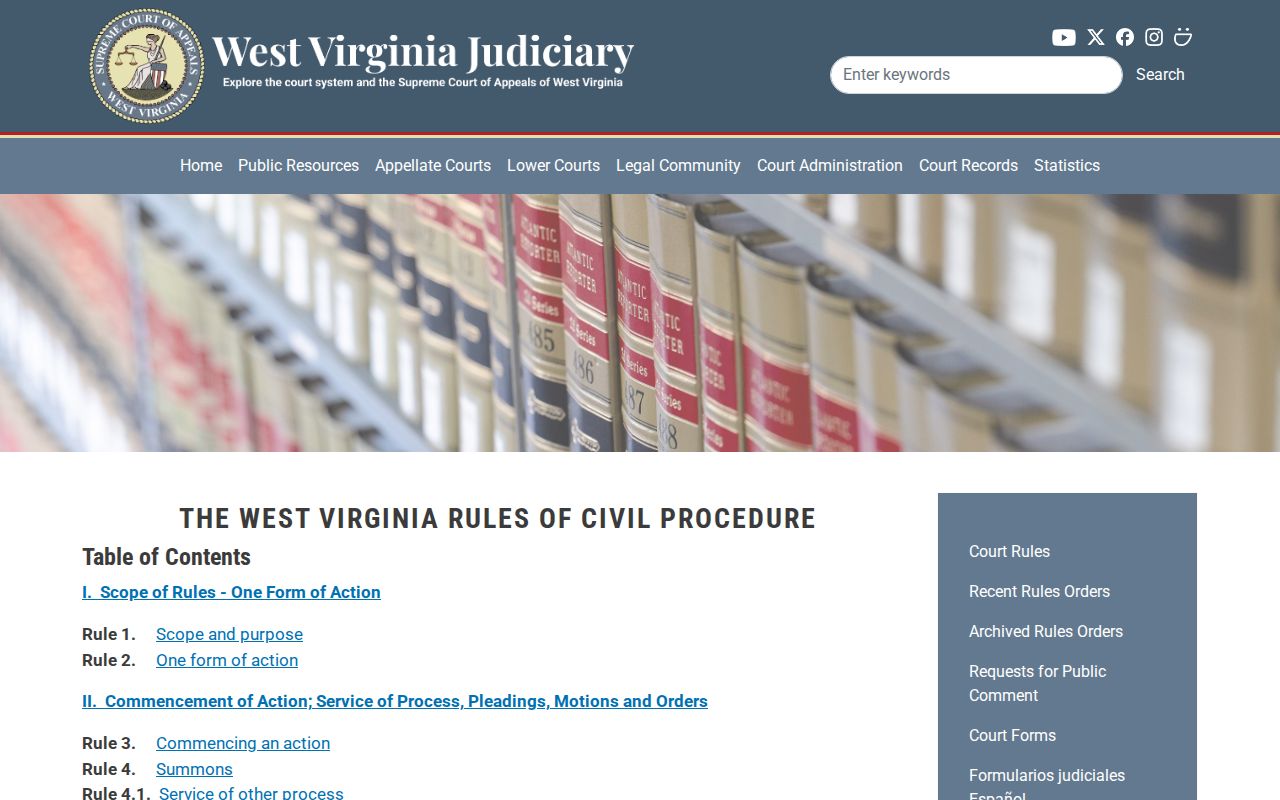
Rules explain labels. The Wayne County docket and the filed order itself still tell you what happened in a given action. The circuit jurisdiction statute now in force defines how much authority Wayne County Circuit Court holds.
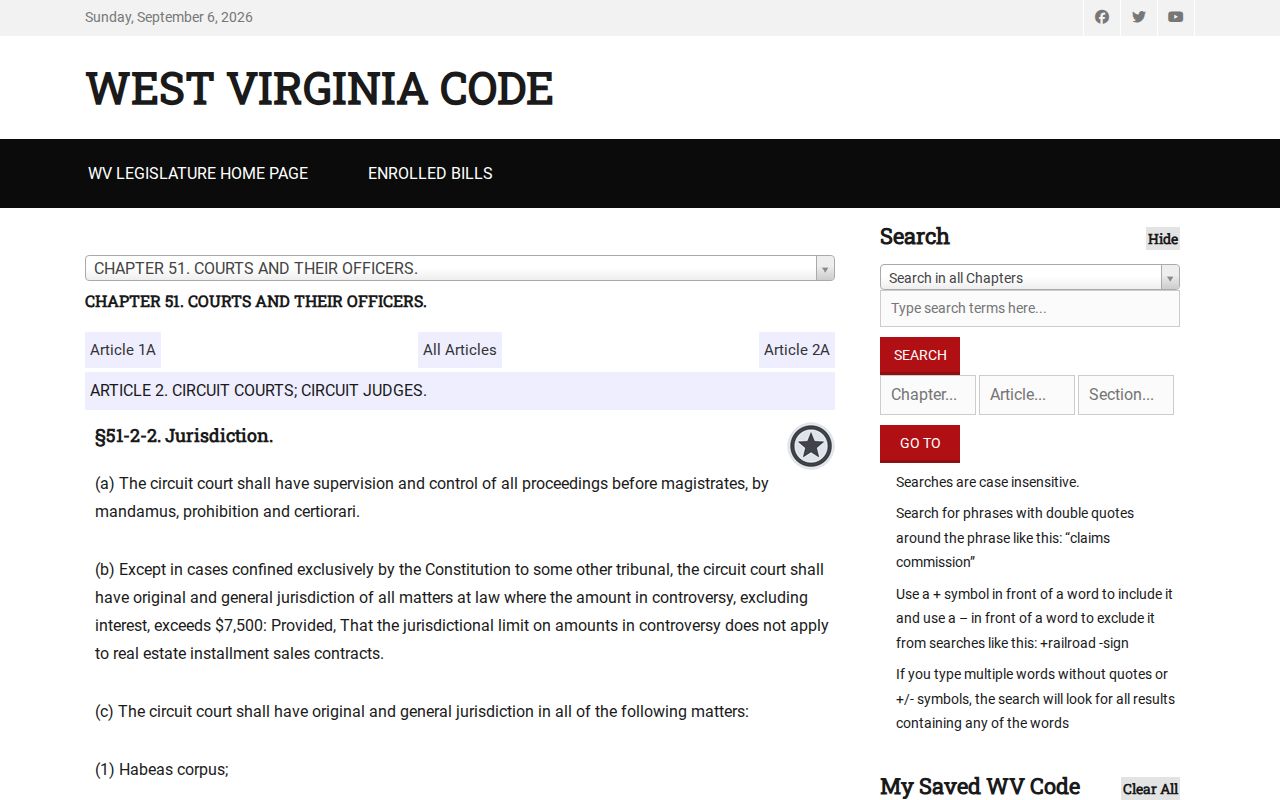
That routing matters. Higher-value and specially assigned civil matters belong in circuit court, not the magistrate search. The magistrate civil jurisdiction statute states the lower court's general monetary limit and the case categories it covers.
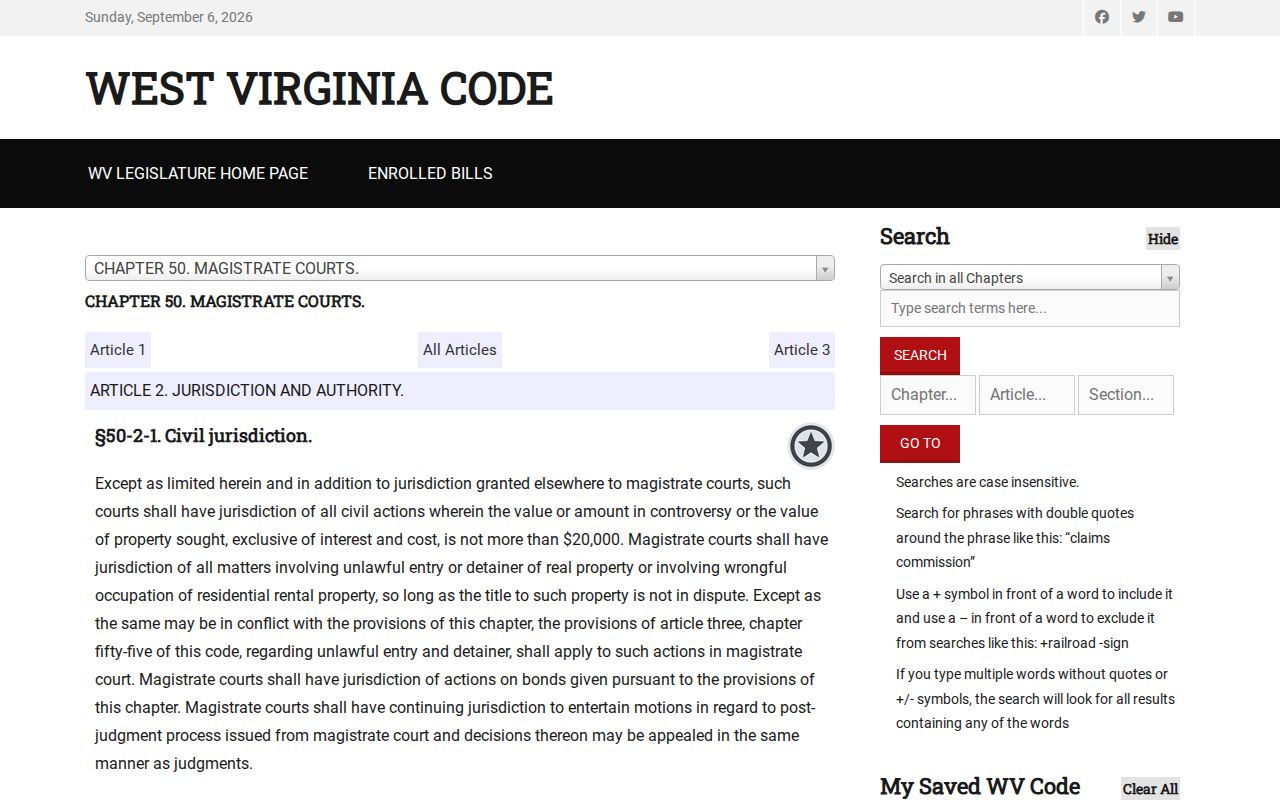
Older summaries sometimes lag behind. The statute in force fixes the general magistrate civil limit at $20,000, the figure this Wayne County guide applies.
Wayne's Current Magistrate Civil Threshold
West Virginia Code §50-2-1 caps general magistrate civil jurisdiction at $20,000 and also covers categories like unlawful entry or detainer where title is not disputed. Some older summaries still say $10,000. Rely on the current statute, the filing court, and the case type when choosing between Wayne Magistrate Court and Circuit Court for a docket search.
No online record? Call the right clerk. You can also inspect the civil docket at the counter or a public terminal, or mail a written request naming the case and the document you need. A library computer reaches WVPASS or Magistrate Search but adds nothing beyond the official system. For certified copies in Wayne County, order from the clerk who holds the record.